
Working Collaboratively
Teams are built on the assumption that, given the right tools and opportunities, people will collaborate successfully because we are social beings.
But is it really that simple?
In practice, teamwork doesn’t always work as expected. Some feel like they’re always carrying the load, while others may feel underutilised. Meanwhile, some might argue that working collaboratively takes too much time, or they have little to gain.
Yet research consistently shows that to be fast and innovative, teams (and teamwork) work best for both the organisation and the individual.
With technology enabling new ways to collaborate, understanding the attributes and behaviours that drive healthy collaboration has never been more critical.
What’s the secret to healthy collaboration?
High-performing teams and successful organisations share one key trait: they excel at working together.
In our experience, collaboration thrives on two key elements: confidence and connectedness. When each individual feels confident in their role and purpose, and they understand how to connect effectively with others (in person and online), collaboration will be more successful.
By fostering healthy collaboration, teams unlock their potential and create an environment where innovation and growth thrive.
The Hargraves Collaboration Model
(Backed by 20 years of research and practice.)
CONFIDENCE
Autonomy: Your team has control over project activities and processes.
Competence: Your team has the mastery to succeed.
Sense of Progress: Every team member understands the project purpose and milestones.

CONNECTEDNESS
Belonging: Your team feels proud of being part of something bigger.
Trust: Team members trust each other and the organisation.
Engagement: Team members connect with others, internally and externally.
The research behind our model
When we set out to research the key drivers of collaboration, we weren’t starting from scratch. After all, Hargraves was built on a foundation of collaboration.
Rather, we sought a deeper understanding—the theory, data, and research to validate our experience. We wanted to confirm whether the evidence supported what we knew and explore where it could take us.
From Research to Practical Application
Quick start: self-assessment
How collaboration-ready are you?
Great teamwork starts with you. But how ready (and willing) are you to collaborate effectively?
Take our Collaboration Assessment: answer six quick questions to uncover your collaboration strengths and identify where you can improve.

Working Better Together
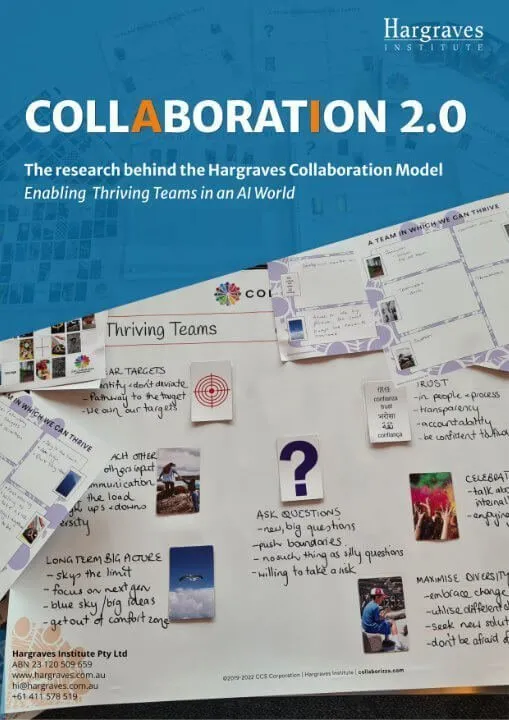
This White Paper includes practical tools and strategies to help leaders and managers improve collaboration within and between teams. Explore research-backed ideas to help you lead with confidence, foster trust, deepen engagement, and create the conditions for healthy, effective collaboration.
Download the Whitepaper to:
- Explore the benefits and challenges of collaborative working.
- Deep dive into the six elements within our Collaboration Model.
- Discover strategies to nurture these behaviours with your team.
Turn theory into practice using the Team Collaboration QTool. Built on our Better Questions Approach, this tool will help you prompt conversations, identify team priorities and agree on actions.

* All information is treated in confidence. Your personal details will never be shared. We may use de-identified themes to better understand common workplace challenges and improve our tools and resources.
Take your team from friction to flow
We don’t just improve how teams work together. We help leaders embed uncommon tools that turn strategy into action.
Explore Thriving Teams and build lasting capability.